Six weeks as a full-time activist
It’s been six weeks since my last day at work. It feels crazy. It’s a freedom and a joy to get to work on what truly matters, but I also struggle with feelings of anxiety, insecurity, and guilt. If I no longer earn a lot of money, I can’t be a source of security for others around me in the same way. But I worry even more about something else: whether change is even possible. I’m worried that my work will be in vain. Kind people have told me that “at least you’re trying!” I’m grateful for that comfort.
What do I do during the day?
Here’s a sampling of what I’ve been up to so far:
During All Hallows’ Eve, I coorganized a weekend meeting for “the disobedient climate movement”. We brought together people from different groups to both make contacts, strategize, and hone our skills.
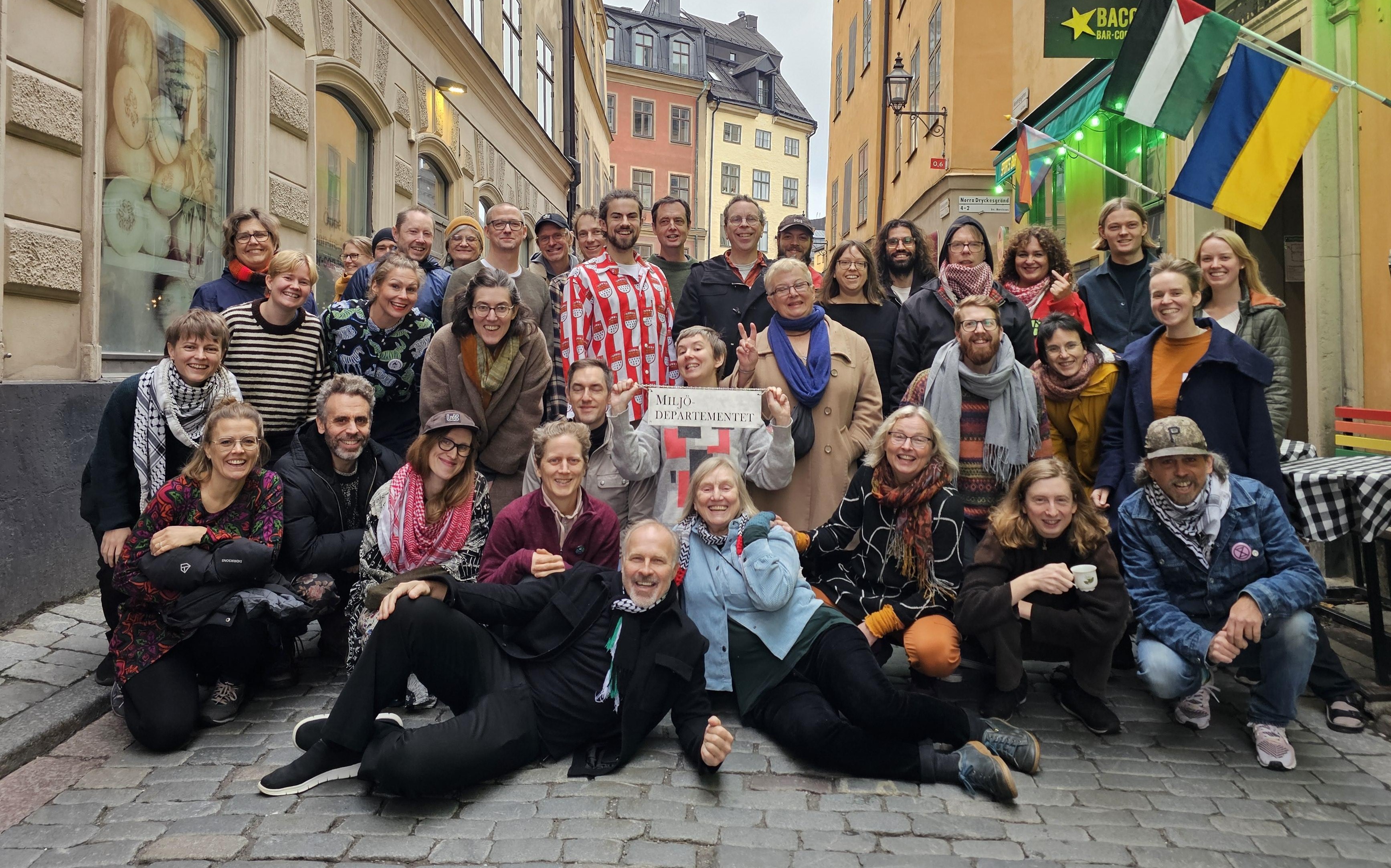
In week 45, I had many meetings with old colleagues who wanted to know more about what I’m doing. The same week, I attended a film screening about “alternative economic systems” at Sofia parish here in Stockholm. Wellbeing Economy Alliance is an organization that brings together voices and actors who advocate for an economic system that prioritizes human well-being over maximum economic activity.
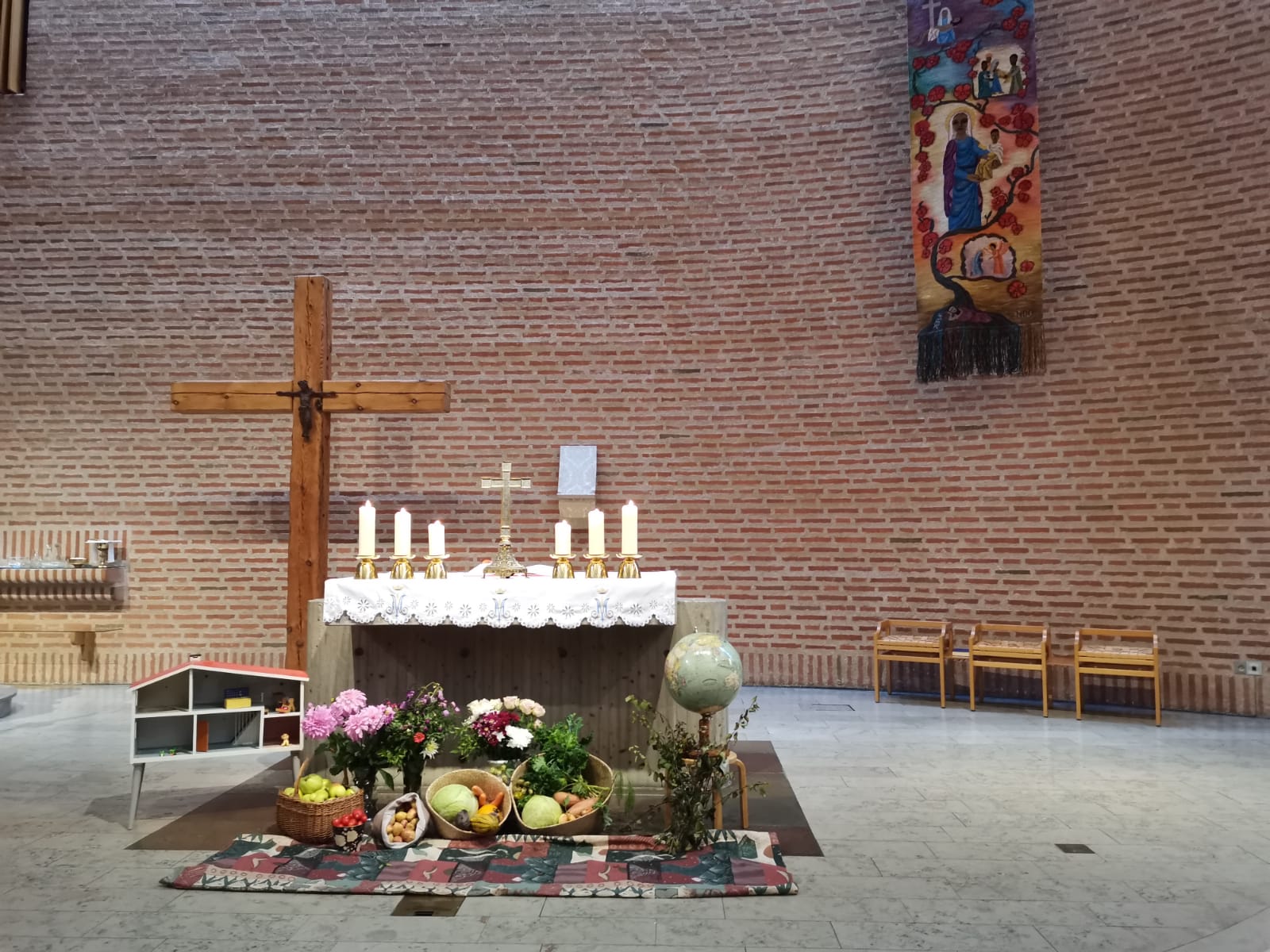
One of my activity tracks is to influence within the church, which is why I run a climate prayer group every Sunday at Saint Eugenia parish in Kungsträdgården. I have learned that there are strong, albeit rare and scattered, voices for sustainability within the Church. In Lund there is a Dominican friar Björn Engdahl, who runs a permaculture garden. I try to learn from him, and visited him on November 13. During our conversation he reminded me of the importance of ecumenism. I have also participated in Christian Climate Action daily prayer time.
On November 6, I participated as a spectator at a trial where activists from Restore Wetlands were to be sentenced for an action at the Finnish embassy in 2024. Witnessing a trial is a compassionate act of support, and transformative for oneself. I wrote about that in a blog post. Now the verdict has come: it varied between 100 hours of community service and three months in prison for the various activists.
On November 7th, I participated in a demonstration outside the Chilean embassy. I went to that one because I want to increase my understanding of resistance in other countries. I mentioned it in another blog. The same day I also met Lars Noväng who continues to teach me a lot about rituals, art, and existentialism.
On November 15th, I was invited to a meeting with Höj Rösten, a political school (?). Sometimes people tell me that I should become a politician. However, I still feel that politicians seem very powerless - they are so influenced by economic interests, and so much chasing short-term opinion.
On November 17th, I helped the Rebel Mothers to hold a demonstration outside the Church of Sweden’s church council where they made decisions about how to manage their large forest estates.
On November 20th, I participated in ClimateExistence in Uppsala, at the invitation of Lars Noväng. It was a symposium that focused on existential themes.
On November 22nd, I took an information officer training course with Friends of the Earth in Gothenburg. This allows me to go to school classes and hold workshops on climate justice.
On November 26th, I took the ferry to Finland to participate in the Nordic Baltic Youth Summit. I wrote more about it in this blog post.
In addition to one-off events like these, I work continuously with other things that are enabling for the movement. Every Monday I do association finances. I sort receipts, and register donations. I also work on klimatkalendern.nu, a calendar to help the Swedish climate movement collaborate and help new people get oriented faster.
What is the plan going forward?
This is how I understand myself right now: I am an activist on three legs. One is existential, one is an action leg, and one is about personal sustainability.

The existential leg is the ongoing struggle to understand what is happening to humanity, and to find out how I should relate to it. Within that framework, I will continue to read books, research articles, and listen to experts. I will also meditate, pray, and listen to other people, to constantly reevaluate what is the right way to act on that knowledge.
The action leg is about execution - making plans, working strategically, getting things done. That’s I developing the climate calendar, going to demonstrations, talking to people, or interrupting political speeches. I want to do as much as I can of “the right thing”, but am haunted by thought that I never really know for sure what “the right thing” really is. I always have to work according to some kind of “best approximation so far”.
The last leg - personal sustainability - reminds me that I will not be able to help others if I do not take care of myself. It is about health, relationships, and personal finances. For example: Now that I do not have a job, it is important to reduce my expenses as quickly as possible. I have rented out my apartment, and my goal is to live with significantly lower costs. I will sooner or later have to find new ways to support myself, but the question is, how long do I have?
All three legs are needed, and all three affect each other: It doesn’t matter how effective I am if I don’t do the right thing. But the action itself probably provides insights into what the “right thing” is that can’t be gained in other ways. And I trust that within the next year I will find new ways to support myself that are currently beyond my comprehension.
Some things I’m reading right now
I’m reading the book Life happening here and three brand new doctoral dissertations:
- Children of the Crisis: Political Subjectivity, Responsibility and Justice in the Swedish Climate Movement (Lotte Schack)
- Data Anchorings: Reimagining engagements with environmental data in everyday life (Arjun Rajendran Menon) which is about why climate data is often “objectively correct but meaningless” and how to communicate better.
- Pathfinding amid Climate Catastrophe: Faith based climate activism in South Africa and Sweden (Sofia Oreland) which is not yet released, but she presented her research in Uppsala and the link goes to her presentation at Researcher’s Desk. When she compared activists in Sweden and South Africa, several interesting patterns emerged, but one thing in common has been a focus on “orthopraxis”, i.e. that faith expresses itself in “right” action. I feel this strongly.
And I just happened to stumble upon Deep Adaptation after watching this talk.
Thank you
Thank you for reading this newsletter. Thank you for caring about what I’m doing, and where humanity is headed.